Kelley Blue Book: We Know Cars
- 4.6
- Rating
- 100.00K
- Installs
- Free
- Price

 Analysis by App-foxy
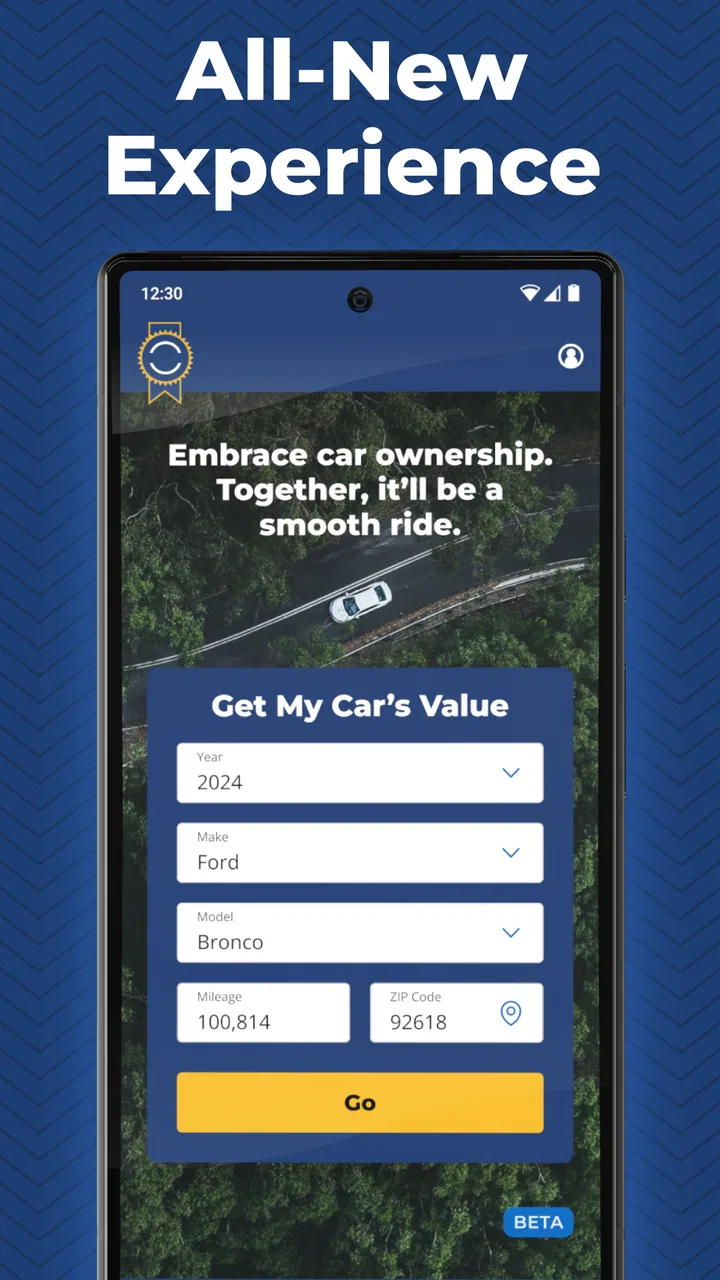
Buying a car is one of those decisions where a few minutes of research can prevent a very expensive mistake. I found Kelley Blue Book: We Know Cars useful because it brings car values and research into one focused place instead of making me jump between general search results, dealer pages, and opinion-heavy forums. It is a free Auto & Vehicles app from Cox Automotive, Inc., aimed at anyone who wants a clearer starting point before shopping, selling, trading, or simply understanding what a vehicle is worth.
My overall impression is that this is best treated as a practical research companion, not as a complete replacement for a mechanic, a test drive, or careful inspection. Its strongest contribution is helping me organize the financial and comparison side of a car decision. The app has a 4.6 average from around 1.2 thousand ratings, and that positive reception makes sense when the goal is quick access to familiar Kelley Blue Book research on a phone.
How Kelley Blue Book fits into real car shopping
The most useful way to approach this app is to open it before emotions take over. A shiny vehicle on a dealer lot can make it easy to focus on monthly payments, appearance, or a salesperson’s urgency. Researching values first gives me a reference point for the vehicle itself. That changes the conversation: instead of asking only whether I like the car, I can think about whether the asking price fits the model, condition, and market context shown by the app.
You May Also Like

 Google Keep - Notes and lists
Google Keep’s Quiet Growth Shows the Appeal of Simpler Notes
As mobile work gets busier, Google Keep keeps winning a simple contest: capture a thought quickly, find it later, and get on with the day.

 Blood Strike: 2.5 Anniversary
Blood Strike’s Loadouts Turn Every Drop Into a Tactical Gamble
A close look at Blood Strike’s custom loadouts: how fast access to signature weapons reshapes its battle royale rhythm, rewards preparation, and narrows the gap between fights.

 Pandora - Music & Podcasts
Pandora’s Music Is Easy to Start, but Harder to Recover
Pandora’s strength is its low-effort path from a seed to a station. Its weak spot is how much confidence it asks you to place in connection, setup, and quiet recovery.

 8 Ball Pool
 Is Built on Rivalries, Rematches, and Routine
A close look at the rivalries, rematches, shared routines, and unanswered safety questions that turn a quick pool match into a persistent mobile community.

 Samsung Music
’s Quiet Strength Is Playing What You Already Own
Its reach comes less from spectacle than from dependable access to a personal library. That simplicity is both the app’s strongest retention engine and its ceiling.

 AccuWeather: Weather Radar
AccuWeather Review: A Quick, Clear Forecast for Everyday Decisions
For everyday plans, the best forecast is the one you can understand quickly. AccuWeather makes rain timing, radar, and local conditions easy to act on, with a few trade-offs.
More From Our News Desk



I also like that its purpose is broader than a simple price checker. The store summary presents it as a place for car values, research, and more, while the short description identifies Kelley Blue Book directly. In practice, that positioning makes it more useful during the whole shopping process. I can use it while narrowing a shortlist, revisit it when comparing similar vehicles, and return to it before making an offer.
For a first-time buyer, the app can act as a vocabulary and confidence aid. Car shopping often involves unfamiliar trim names, model years, vehicle types, and pricing language. Researching before visiting a dealership helps reduce the feeling that every answer must come from the seller. For an experienced owner, the value is different: it is a convenient second opinion when deciding whether to keep a current vehicle, trade it, or investigate a replacement.
What feels quick and what deserves patience
My expectation for this app is not the instant simplicity of a calculator. Research tools naturally ask me to make choices and read context. The perceived speed is strongest when I already know what I want to investigate, such as a particular make, model, or vehicle situation. A focused search feels more efficient than browsing aimlessly, especially when I use the app before I am standing in front of a car.
The slower part is not necessarily the app itself; it is the thinking required to make a fair comparison. A value is only useful when I enter or interpret the right vehicle details. A similar-looking model can have a different trim, mileage, condition, or equipment, and those differences can affect whether a price feels reasonable. I would rather spend an extra moment checking the details than treat the first number I see as a final answer.
That leads to one of my most important tips: use the app to create a range of questions, not a single magic number. If I am reviewing a used car, I would note the vehicle’s exact identity, compare the app’s guidance with the seller’s price, and then investigate anything that explains a meaningful gap. This workflow is more reliable than using a value as automatic permission to buy.
Handling a busy shopping session
The app becomes more valuable during heavy-use moments, such as comparing several vehicles in one afternoon. I might begin with a compact car, check an alternative crossover, and then review a private-sale listing later the same day. That kind of session tests organization more than raw speed. The practical challenge is remembering which details belong to which vehicle and not mixing one model’s research with another’s.
I recommend keeping a simple shortlist outside the app while researching. Write down the model, year, mileage, asking price, and the reason it remains under consideration. Then use Kelley Blue Book as the research layer rather than expecting it to become the entire shopping notebook. This small habit makes the app more effective because it protects me from comparing vehicles based only on vague impressions.
A realistic example would be someone whose current car needs an expensive repair. Before deciding whether to fix it, I would use the app to understand its likely market position and then research replacement candidates. That does not answer the repair question by itself, because mechanical condition and repair quality matter, but it can clarify whether replacing the vehicle is financially sensible. The app is especially helpful here as a bridge between an emotional problem and a more structured decision.
Another useful workflow is to check a car before contacting a seller, then repeat the research immediately before negotiating. The first pass tells me whether the vehicle deserves attention. The second pass helps me confirm that I am discussing the same trim and condition assumptions after seeing the listing details. This two-stage approach reduces the risk of anchoring on an attractive advertisement.
Stability and recovery when the session gets interrupted
For a research app, reliability is less about entertainment-style smoothness and more about whether I can return to a decision without losing my train of thought. Kelley Blue Book: We Know Cars is most dependable when I treat each visit as a focused research task. I can open it with one question in mind, gather the relevant information, and leave with a clearer next step.
Car shopping is also full of interruptions. A dealer may call, a family member may ask for a second opinion, or I may need to switch from the app to a listing or message. I would not rely on memory alone after that interruption. Saving the vehicle details in my notes and recording why I opened the app makes recovery easier. The app supplies the research, while my notes preserve the decision trail.
This matters because a value lookup can create false certainty if I cannot remember the assumptions behind it. If I return later and only remember a rounded figure, I may forget whether I was looking at a private sale, a trade-in situation, or a dealer purchase. My advice is to record the context beside the result. That is a small but important reliability improvement in the overall workflow.
The app’s current version is 2.5.1, and it was released on November 13, 2024. Those details make it sensible to keep the application updated through the normal store process, particularly for a research tool that may evolve as vehicle information and shopping habits change. I do not view an update number as proof that every experience will be perfect, but it does identify the version I would expect to use when evaluating the app today.
Resource demands and device limits
Kelley Blue Book: We Know Cars is designed for mobile research rather than long-form entertainment, so I see its main device constraint as attention rather than performance. A phone is convenient for checking a vehicle beside a dealer listing or while speaking with a seller, but the smaller screen can make side-by-side comparisons less comfortable than on a tablet or computer. If I am examining several options, I prefer a larger screen or a separate note-taking space.
The app supports devices running Android 9 or later. That is a meaningful consideration for anyone using an older phone. Before planning to use it on a spare device, I would check the operating system first rather than assuming that any Android phone can install it. On a compatible device, the more important practical concern is keeping enough attention for accurate data entry and interpretation.
I would also avoid judging a vehicle while rushing through a weak connection or a crowded dealership environment. Research apps are most useful when I can read the information carefully. If the screen feels slow, the content does not load as expected, or I am being interrupted, I would pause the purchase discussion instead of making a decision from partial information. That is not a criticism unique to this app; it is a sensible boundary for any mobile tool used during a major purchase.
Resource demands are unlikely to be the deciding factor for most people considering this application. The more significant trade-off is convenience versus depth. A phone-based reference is easy to carry, but it cannot replace a full inspection, a financing review, ownership-cost calculations, or a conversation with a trusted mechanic. The app helps me research the market position of a vehicle; it does not turn a phone into a complete automotive evaluation service.
Where it beats familiar alternatives
The usual alternative is a mixture of web searches, dealer listings, classified advertisements, social media groups, and advice from friends. That mixture can be useful, but it often produces inconsistent assumptions. One page may focus on a seller’s asking price, another on a personal opinion, and another on a vehicle with different equipment. Kelley Blue Book gives me a more focused place to begin, which is its main advantage.
Compared with asking a friend, the app is better for establishing a repeatable research habit. A friend may know a lot about cars but still be biased toward a brand, body style, or personal experience. Compared with a dealer’s own page, the app is more useful as an independent starting point because I am not relying solely on the party trying to sell me that particular vehicle. Compared with a general search engine, it reduces the time spent filtering irrelevant results.
However, other tools can be better for specific jobs. A dedicated vehicle-history service may be more appropriate when I need records tied to a particular used vehicle. A mechanic is the better choice for judging mechanical condition. A finance calculator or lender may be more useful for understanding the total cost of borrowing. I would combine those resources rather than expecting one automotive app to cover every risk.
The trade-off is therefore clear: this app is strong at research orientation and value awareness, while broader shopping platforms may offer more listings or direct seller interaction. If my main goal is to find every available vehicle nearby, I would start with a marketplace. If my main goal is to understand whether a candidate’s price deserves closer attention, Kelley Blue Book is the more natural first stop.
Who will get the most from it
I would recommend it to first-time buyers who want a calmer way to prepare, owners deciding whether to sell or trade, and shoppers comparing several models before visiting dealerships. It is also useful for someone helping a family member buy a car, because a shared research process is easier when both people are discussing the same vehicle information rather than relying on separate searches.
It suits people who prefer to make decisions gradually. I can research at home, revisit the same question later, and use the app as a checkpoint before responding to a listing. That is particularly valuable when a seller creates pressure. Having a prepared reference point makes it easier to say, “I need to verify this,” instead of agreeing immediately.
I would be more cautious about recommending it to someone who wants a one-screen answer with no interpretation. Vehicle values are context-sensitive, and the app should not be used as a substitute for checking condition, documentation, ownership costs, or the exact terms of a deal. It is also not the right primary tool for a person whose only goal is browsing local inventory or arranging a test drive.
My performance verdict after using it as a research tool
My verdict is positive, with realistic expectations. Kelley Blue Book: We Know Cars feels most effective when I use it early, before a seller’s price or a vehicle’s appearance becomes the whole story. Its perceived speed is best during focused lookups, its usefulness grows during comparisons, and its reliability depends partly on my keeping track of the assumptions behind each research step.
The free price removes an obvious barrier, and the Everyone content rating makes it approachable for a broad audience. It has passed the 100 thousand install mark, which also reflects that the app has found a substantial audience among people looking for mobile car research. I would still judge it by the quality of my decisions rather than by adoption alone.
The smartest way to use it is as a negotiation and research checkpoint, not as a final verdict on a car. Check the vehicle carefully, record the details that shaped the result, compare the asking price with the wider situation, and bring in a mechanic or other specialized resource when the decision requires expertise beyond market research.
For me, that balance is what makes the app worthwhile. It does not eliminate the work involved in buying or selling a vehicle, but it makes the early research more organized and less dependent on sales pressure. If you want a focused automotive reference on a compatible Android device, I would install it before the next serious car-shopping trip. If you need listings, inspection findings, or financing analysis above all else, pair it with tools built specifically for those tasks.
FAQs for Kelley Blue Book: We Know Cars
01What features does the Kelley Blue Book app offer?
The Kelley Blue Book app provides a suite of features including car valuation tools, detailed vehicle specifications, and comparisons. Users can access expert reviews and market analysis, as well as browse a comprehensive inventory of new and used cars. The app also offers tools for calculating car payments and finding local dealers.
02Is the Kelley Blue Book app free to use?
Yes, the Kelley Blue Book app is free to download and use. However, some features may require registration or access to premium content. The app provides valuable insights and tools at no cost, making it accessible for users looking to make informed car-buying decisions or assess the value of their current vehicles.
03Can I use the Kelley Blue Book app offline?
The Kelley Blue Book app requires an internet connection to access its full range of features, such as up-to-date car valuations and the latest market analysis. While some basic information might be available offline, an online connection ensures the most accurate and current data for users.
04How accurate is the car valuation on the Kelley Blue Book app?
Kelley Blue Book is known for its reliability and accuracy in car valuations, utilizing a comprehensive set of data and market trends. The app provides users with realistic estimates based on current market conditions, vehicle condition, and regional variations, ensuring users have trustworthy information for their buying or selling needs.
05Is the Kelley Blue Book app available for both Android and iOS devices?
Yes, the Kelley Blue Book app is available for both Android and iOS platforms. It can be downloaded from the Google Play Store for Android devices and the Apple App Store for iOS devices, ensuring compatibility across a wide range of smartphones and tablets.
Pros
- Comprehensive car pricing data.
- User-friendly interface.
- Includes car reviews and ratings.
- Offers trade-in value estimates.
- Access to historical price trends.
Cons
- Limited features in free version.
- Occasional app crashes reported.
- Requires internet for full functionality.
- Ads can be intrusive.
- Some data may be outdated.

Kelley Blue Book: We Know Cars
Gallery